

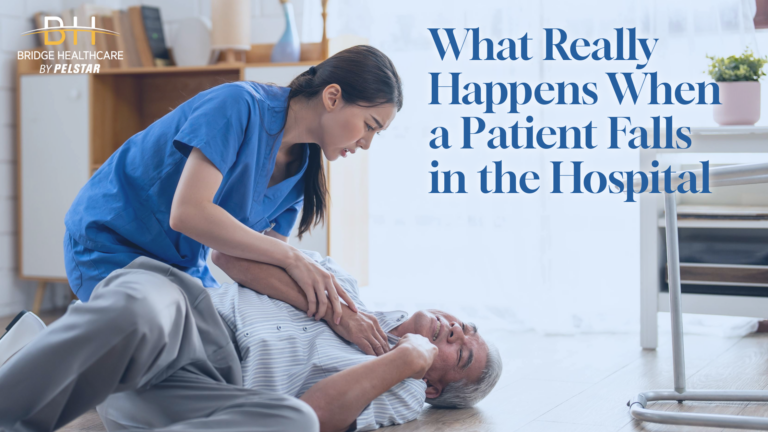
What Really Happens When a Patient Falls in the Hospital
Hospitals are designed to heal, but for thousands of patients every day, they can also become the setting for a life-changing setback.
A patient fall may seem like a simple accident. In reality, it often triggers a cascade of clinical, emotional, and financial consequences that can impact patients, caregivers, and healthcare systems alike.
The Hidden Reality of Hospital Falls
Each year in the United States, 700,000 to 1 million patients experience a fall during a hospital stay. These aren’t rare events. They are one of the most common adverse incidents in healthcare.
And they’re not harmless.
Up to 25% of falls result in injury. About 10% lead to serious injury such as fractures or head trauma. Falls can add an average of 7 extra hospital days and tens of thousands of dollars in cost per patient.
For vulnerable populations, especially older adults, falls can be devastating. They are associated with increased mortality, long-term disability, and loss of independence.
What Actually Happens After a Fall?
When a patient falls, the impact goes far beyond the moment of the incident.
Immediate Clinical Response
The first priority is rapid assessment. Care teams need to determine if the patient hit their head, if there are fractures or internal injuries, and whether there is bleeding or neurological impairment.
Even if injuries are not obvious, patients often require imaging, monitoring, and sometimes surgical intervention.
A Sudden Change in Recovery Trajectory
A fall can derail a patient’s entire care plan.
A patient admitted for something routine, like a knee replacement or infection, may suddenly face delayed recovery, reduced mobility, and increased risk of complications such as pneumonia or pressure injuries.
What was supposed to be a short hospital stay can quickly become prolonged and complex.
Emotional and Psychological Impact
After a fall, many patients develop a fear of falling again. This often leads to hesitation to move, reduced participation in therapy, loss of confidence, and increased dependence on staff.
This psychological impact can significantly slow rehabilitation and reduce quality of life.
Operational and Financial Consequences for Hospitals
Falls are often classified as preventable adverse events and in some cases even “never events.”
This means hospitals may not be reimbursed for fall-related injuries. Staff must complete incident reports and root cause analyses, and quality scores and reputation can be affected.
On a system level, hospital falls cost the U.S. healthcare system billions annually.
Why Do Falls Happen in Hospitals?
Hospitalized patients are uniquely vulnerable. They may be weak from illness or surgery, on medications that cause dizziness or confusion, and in unfamiliar environments. Many also have urgent needs like getting to the bathroom quickly.
In fact, many falls occur during routine activities, especially when patients try to move without assistance.
The Critical Gap: Safe Patient Mobility
Even with protocols, alarms, and education, patients still need to move.
They need to use the bathroom, transfer from bed to chair, and regain mobility during recovery. When that movement is not supported safely, the risk of falling increases.
Where FloJac Fits In
Even with the best prevention strategies in place, falls can still happen. When they do, how a patient is assisted afterward is just as important as how the fall is prevented.
FloJac is designed specifically for this critical moment.
FloJac is a high-quality air lifting device that enables a fallen patient to be raised safely and in a controlled manner. Instead of relying on manual lifting, which can pose risks to both patients and caregivers, FloJac provides a more stable and dignified way to return the patient to a safe position.
The system includes a support wedge as standard, allowing patients to maintain a semi-recumbent position when needed. This is especially important for patients who cannot tolerate lying flat due to medical conditions or discomfort.
Designed with infection control in mind, FloJac features an easy-to-clean safety strap, integrated ladder handles, and no removable parts. This makes it practical for busy clinical environments where cleanliness and efficiency are essential.
By improving how patients are assisted after a fall, FloJac helps reduce the risk of further injury, supports caregiver safety, and ensures patients are handled with greater comfort and care.
If you would like to learn more about FloJac, visit https://bridgehcusa.com/flojac/. If you have any questions, please contact us at (800) 815-6615 or info@pelstarllc.com.
Agency for Healthcare Research and Quality (AHRQ). Falls.
Learn more
Estimates 700,000–1 million hospital falls annually and notes many result in injury.
Centers for Medicare & Medicaid Services (CMS). Hospital Harm – Falls with Injury Measure.
View measure details
Defines and tracks falls with moderate to severe injury in hospitals.
JAMA Health Forum. Cost of Inpatient Falls and Cost-Benefit Analysis.
Read study
Finds the average cost of a hospital fall can exceed $60,000 per patient.
HealthLeaders Media (summarizing JAMA research). Evidence-Based Fall Program Saved Hospitals $22M.
Read article
Notes CMS does not reimburse fall-related costs and highlights financial impact on hospitals.
CMS & National Quality Forum. Falls with Major Injury Justification Report.
View report
Identifies falls as serious reportable events and a major patient safety concern.
WorldMetrics. Hospital Falls Statistics Report (2026).
View statistics
Reports average additional cost (~$30,000), longer length of stay, and increased mortality risk.
CDC (via secondary reporting). Cost of Falls in Older Adults.
Read summary
Estimates tens of billions in annual healthcare costs related to fall injuries.